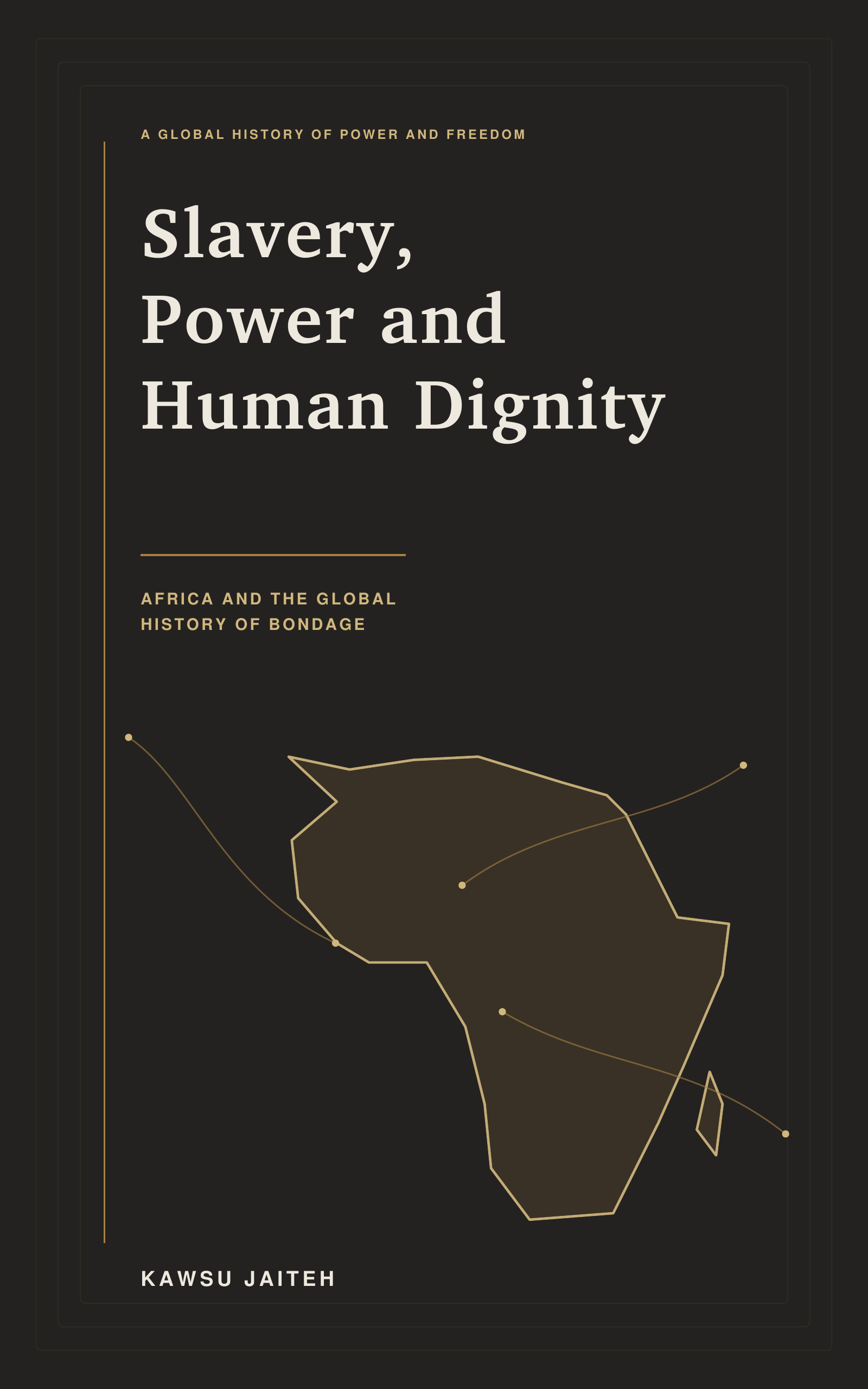
Slavery, Power and Human Dignity
Africa and the Global History of Bondage
A comparative history of slavery, forced labour and freedom that places evidence and human experience at the centre.
About the book
Slavery is often discussed through one trade route, one empire, one religious tradition or one set of statistics. Slavery, Power and Human Dignity takes a wider comparative approach. Its subject is slavery in and from Africa, but the book follows the connected systems that carried enslaved people across the Atlantic, the Sahara, the Red Sea and the Indian Ocean.
It asks recurring questions across different societies: how people became enslaved; who possessed the power to hold, sell or move them; which laws and customs sustained that power; what labour, profit or status bondage provided; how family life was affected; how people resisted; and what changed when abolition became law.
The book also distinguishes what the evidence can establish from what it cannot. Where records are uneven, estimates remain estimates. Similar institutions are compared without being treated as identical. The aim is not civilisational scorekeeping, but a clearer understanding of power, coercion, freedom and human dignity.
What the book covers
- What slavery is — and how historians define it
- Africa before the major slave trades
- The Atlantic transformation
- Trans-Saharan slave trades
- The Red Sea, Swahili Coast and Indian Ocean systems
- Demography, family, trauma and long-term consequences
- Resistance, revolt and struggles for freedom
- Abolition and the modern anti-slavery world
- Colonialism, forced labour and coercion
- Modern trafficking and human exploitation
- What the history teaches about power, freedom and dignity
“History should illuminate, not inflame.”Mission and Method